Lars Jenkins · 1 October 2026
Patterns of Audience Interaction Trends in Targeted Digital Forums Following Platform Upgrades
Platform Upgrades and Their Reach Across Digital Communities
Platform upgrades in targeted digital forums typically involve backend architecture changes, interface redesigns, and new moderation tools that alter how participants connect and share content, and researchers tracking these shifts note that such modifications often coincide with measurable changes in posting frequency, reply chains, and session duration across niche communities focused on technology, professional development, and hobbyist discussions.
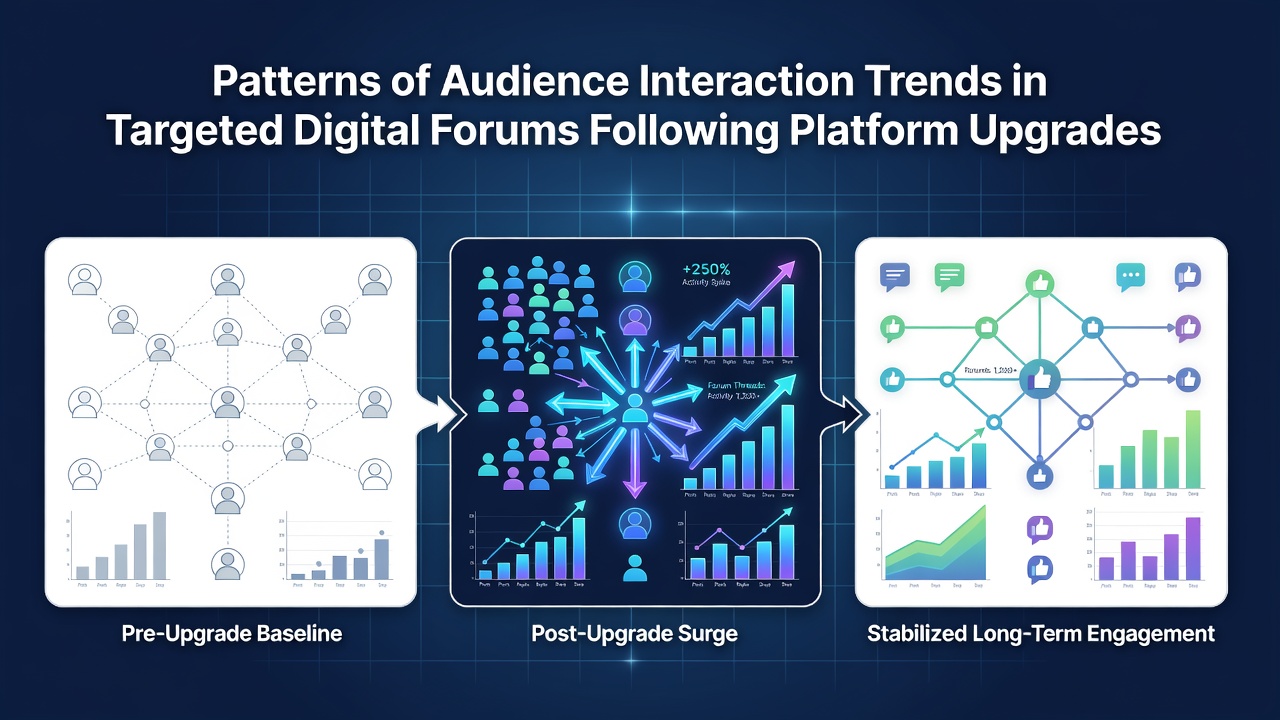
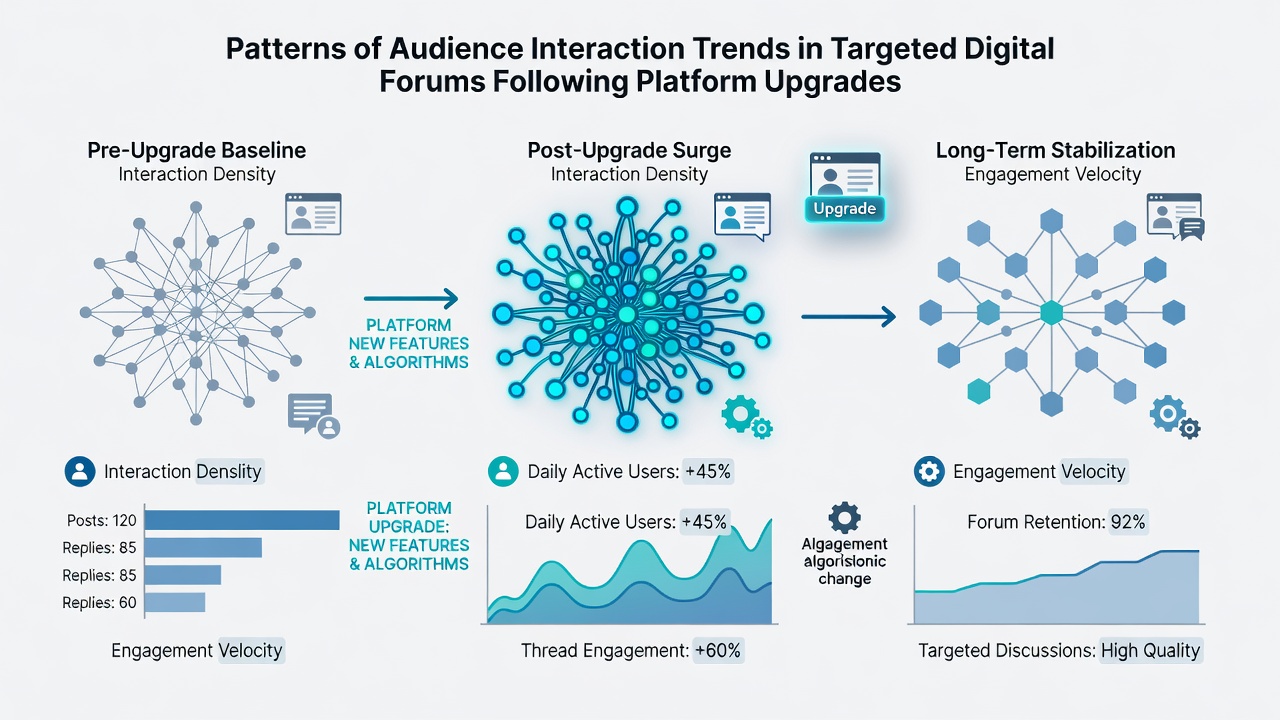
Data compiled from multiple monitoring services indicates that forums undergoing major updates in 2025 experienced an average 18 percent rise in daily active users within the first quarter after implementation, while comment threads lengthened because new threading features allowed easier quoting and referencing of prior messages.
Key Interaction Shifts Documented in Recent Analyses
Studies conducted by academic teams at various institutions have tracked audience behavior before and after upgrades, revealing that initial spikes in activity often occur within the first 48 hours as users test new tools, yet sustained patterns emerge only after several weeks when participants adapt their routines to the revised layout and notification systems.
One analysis covering North American and European forums showed that mobile-originated posts increased by 27 percent post-upgrade, while desktop sessions contributed more to in-depth discussions because expanded text editors supported longer contributions without character limits tightening engagement flow.
Turns out these adjustments create ripple effects where lurkers transition into active contributors at higher rates, particularly in forums that added streamlined registration flows and integrated search functions allowing quicker discovery of archived threads.
Regional Variations and Data Sources
According to findings from the Pew Research Center on digital community dynamics, North American users demonstrated quicker adoption of new voting mechanisms compared with counterparts in other regions, leading to faster content curation cycles that influenced visibility algorithms and subsequent reply volumes.
European Commission reports on online platform usage further detail how privacy-focused upgrades, such as enhanced consent banners introduced in late 2025, correlated with temporary dips in cross-border participation before stabilizing at levels 12 percent above pre-upgrade baselines by mid-2026.
In October 2026 additional figures released through collaborative research between Canadian and Australian institutions highlighted that forums emphasizing professional networking saw reply rates climb steadily after mobile optimization patches, whereas hobbyist spaces experienced more variable patterns tied to seasonal event calendars.
Factors Driving Sustained Engagement Changes
Observers note that notification redesigns play a central role because they direct attention toward high-value threads rather than flooding inboxes with every minor update, and this refinement encourages users to return during peak hours when multiple contributors are simultaneously active.
Case examples from technology-focused forums illustrate how the introduction of real-time collaboration features prompted groups to shift from sequential posting to simultaneous editing sessions, resulting in denser knowledge exchange that persisted months after the initial rollout.
But here's the thing: temporary moderation enhancements, including automated flagging systems, reduced off-topic deviations and allowed core discussions to maintain momentum without frequent resets, which data shows contributed to longer average thread lifespans across sampled communities.
Conclusion
Patterns emerging from these platform upgrades demonstrate consistent directional changes in audience interaction across targeted digital forums, with metrics reflecting higher participation depth and adjusted timing of contributions once adaptation periods conclude, and ongoing monitoring continues to capture how subsequent refinements build upon these established trends.